 Hendersonville Well Pump Repair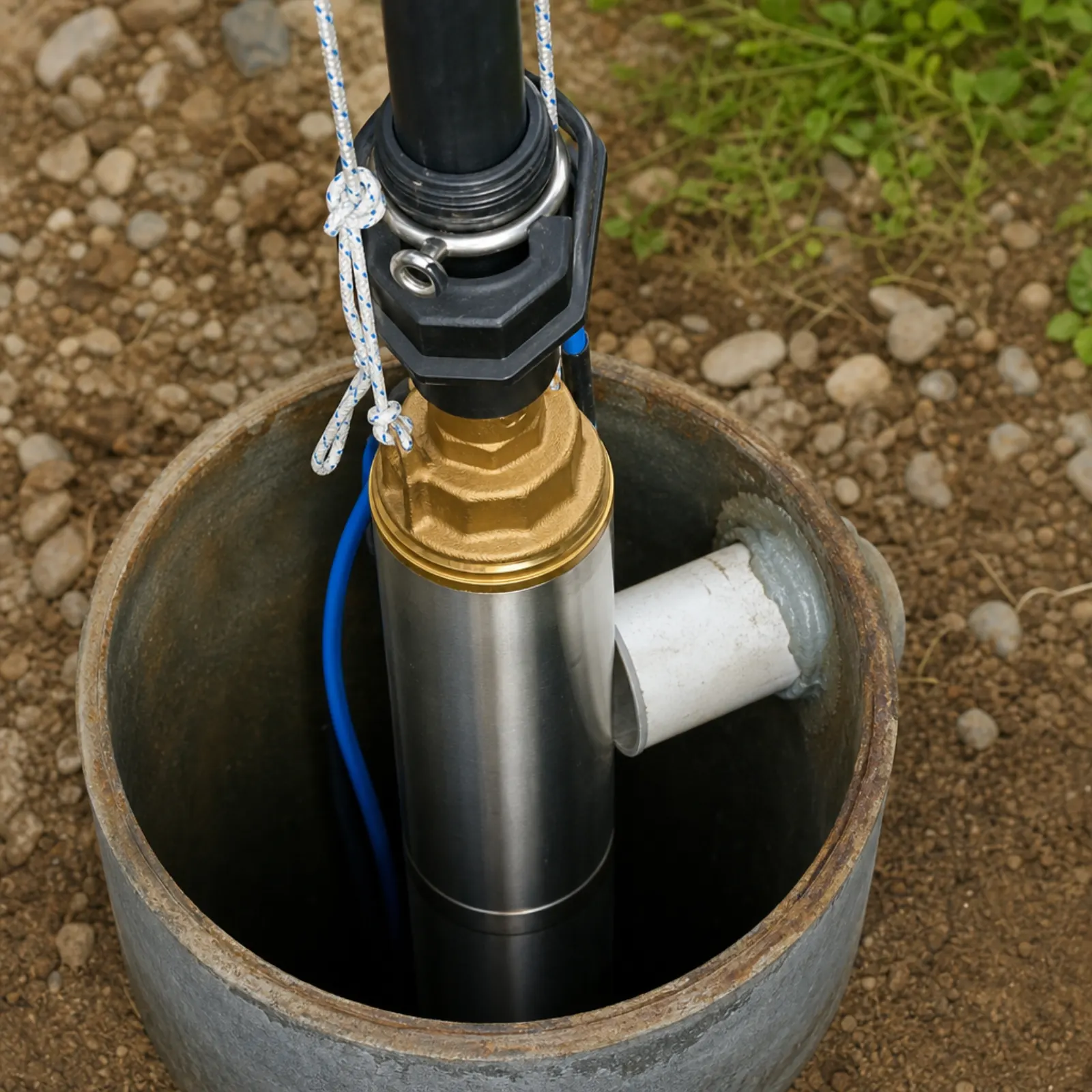
Hendersonville Well Pump Repair diagnoses and fixes private water wells across Hendersonville, Flat Rock, Fletcher, Mills River, Etowah, and out to Brevard and Columbus. A diagnostic visit runs $150 to $300, a pressure switch or control box $150 to $450, a pressure tank $600 to $1,500, and a submersible pump replacement $1,200 to $3,500 depending on depth. Tell us what the house is doing (no water, sputtering, a pump that will not shut off) and the well depth if you know it, and we will give you a straight number, with a dry house flagged as urgent.
This is well country. The City of Hendersonville’s water plant on Haywood Road in Mills River serves more than 32,000 meters along the main corridors, but the county has roughly 122,000 people and most of its land area is outside those lines. Everything on this site is written for the homes on the other side of the meter: the ones where the water comes up out of fractured rock through a pump you cannot see.
What gets fixed
- Well pump repair: no water, low pressure, sputtering air, short cycling, and pumps that never shut off diagnosed at the well head and the tank, then fixed.
- Well pump replacement: submersible and jet pumps pulled and replaced with the right horsepower and stage count for your depth, yield, and household.
- Pressure tanks and switches: waterlogged tanks, chattering switches, bad check valves, and control boxes, the parts that fail most often and cost the least.
- No water emergency service: what to do when the house goes dry, and what an urgent or after-hours call costs.
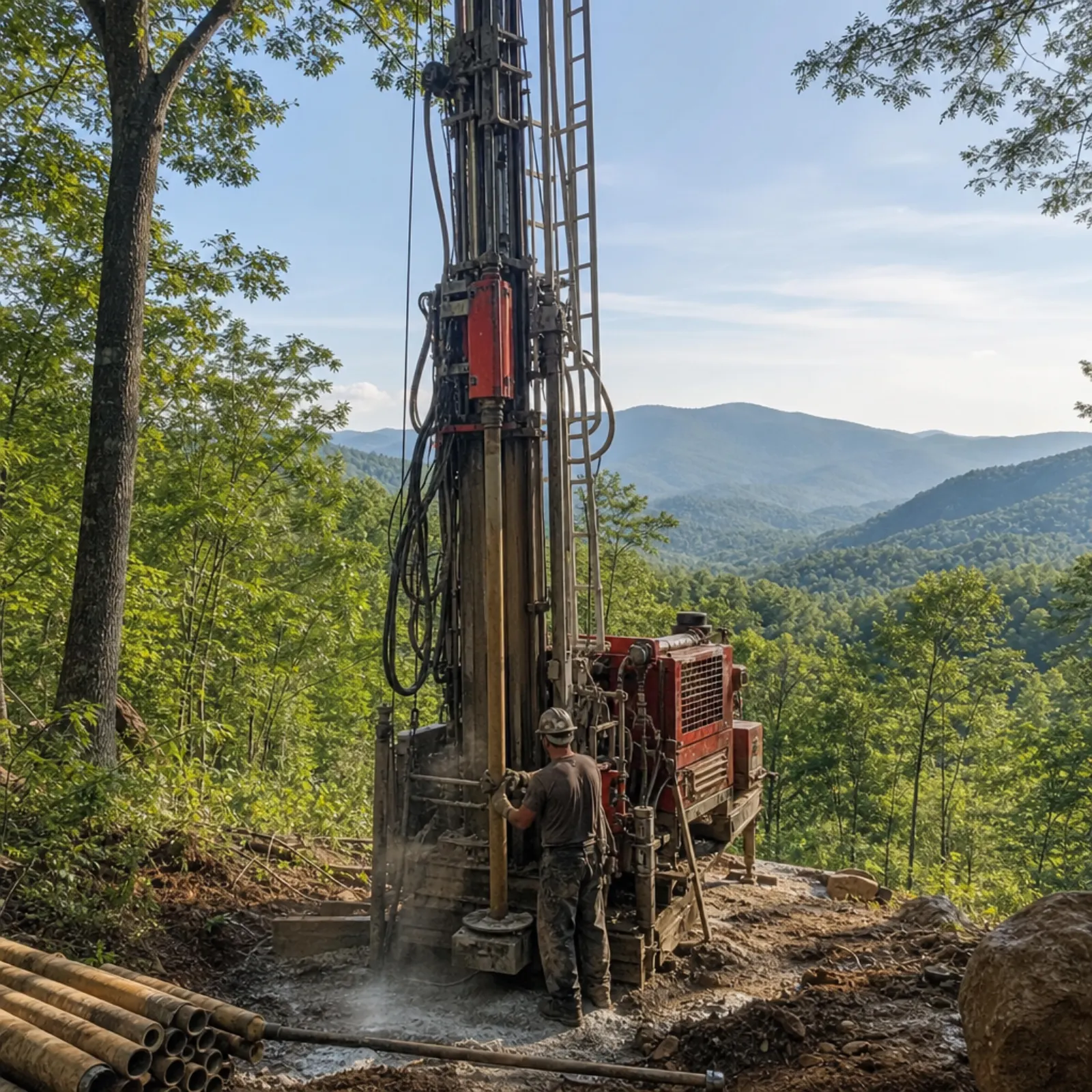
- Well drilling and new wells: new and replacement wells sited to the state setbacks, permitted through Henderson County Environmental Health, drilled, cased, grouted, and tested.
- Well water testing and treatment: bacteria, iron, manganese, hardness, and pH testing, and honest pricing on neutralizers, iron filters, and UV.
Why wells here are different
The rock. Henderson County sits in the Blue Ridge, and the U.S. Geological Survey’s Ground Water Atlas describes the aquifer under it as fractured crystalline bedrock (gneiss, schist, and granite) under a blanket of weathered regolith that can be 150 feet thick in places. There is no sand aquifer to tap. Water lives in the regolith and in cracks in the rock, and a well produces only what the cracks it happens to hit will give. The USGS puts the average reported yield in these aquifers at roughly 15 to 20 gallons per minute, with plenty of wells far below that, and it notes that granite gneiss tends to yield more than mica schist and that fractures get scarcer with depth. A well on a ridge top in Dana and a well in a broad valley draw at Mills River are drilled into the same rock and behave completely differently. That is why depth and yield matter before anyone quotes a pump: a 1/2 horsepower pump that is right for a 12 gallon per minute well at 180 feet will starve and burn up in a 3 gallon per minute well at 500 feet.
The Brevard fault zone. The belt of sheared, crushed rock (geologists call it mylonite) that runs up the French Broad valley through Transylvania County, with Rosman as a classic study locality, marks the seam between the eastern Blue Ridge and the Inner Piedmont. Fault zones like it are where the rock is most broken, and the USGS notes that wells drilled along lineaments and fracture traces consistently out-yield randomly placed wells. It also means well behavior changes over a short distance around Brevard and Etowah.
The water chemistry. Groundwater from Blue Ridge granite and gneiss is soft and acidic. Water treatment companies serving western North Carolina report typical well pH in the 5.5 to 6.5 range, and a USGS assessment of the Piedmont and Blue Ridge crystalline-rock aquifers found nuisance constituents, low pH among them, across about half the study area, with radon and gross-alpha radioactivity elevated across roughly 30 percent and manganese high in about 5 percent. Acid water eats copper. Blue-green stains on a tub, a pinhole leak in a wall, a water heater that fails early: those are well problems, not plumbing problems, and they are on the water testing and treatment page.
The cold. Hendersonville sits at 2,100 feet with a January mean low of 26.5 degrees. The North Carolina plumbing code requires exterior water piping at least 6 inches below the frost line and never less than 12 inches below grade; the pitless adapter that carries water out of the casing below ground is the fitting that keeps a well from freezing, and a well house with a failed heat lamp or a pressure switch in an unheated crawlspace is a classic January no-water call.
The growth. Henderson County grew from 106,740 people in 2010 to 116,281 in 2020 and is about 122,400 now. The county’s own comprehensive plan found that between 1990 and 2000 deaths outnumbered births here, meaning every bit of growth came from people moving in, and 27.4 percent of residents are 65 or older against 18 percent statewide. A lot of those newcomers bought a house on a well for the first time and learned about pressure tanks the morning the shower ran dry. We work for them too.
Where the wells are
The City of Hendersonville’s system reaches from Hendersonville to Etowah to Edneyville to Saluda to Fletcher, roughly 685 miles of main. Its sewer serves the city, part of Laurel Park, the Village of Flat Rock, and the central urban services area. The Town of Mills River provides no water or sewer of its own; it points residents to Hendersonville or Asheville water and MSD sewer where lines exist, and the rest of its 22.5 square miles is wells and septic.
Off those corridors, the private well is the water system. That includes the apple country east of town, where Henderson County grows most of North Carolina’s crop and the six-mile stretch of US 64 toward Bat Cave carries 14 orchards and stands; the coves and ridges of Dana, Edneyville, Fruitland, and Mountain Home; Zirconia and Tuxedo down the Green River side; the farm and horse country of Mills River; the older lake and river lots around Etowah; the wooded estate lots of Flat Rock outside the village core; the hollows above Fletcher; and nearly all of rural Transylvania and Polk counties around Brevard and Columbus.
How a well system works (and what fails)
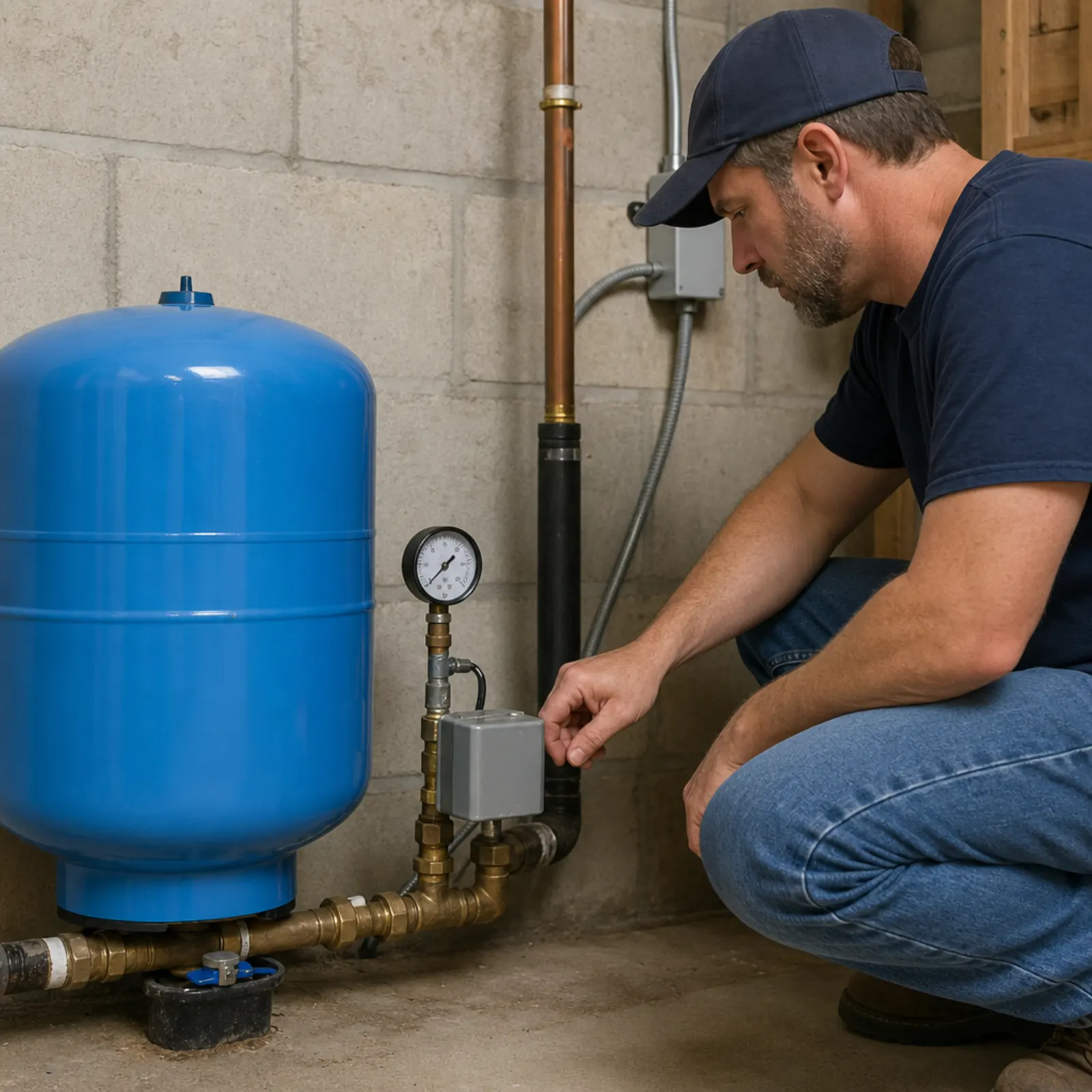
A private well is a drilled hole, 6 inches across in most mountain wells, with steel or PVC casing through the soil and weathered rock and open hole below into the bedrock. The state requires the casing to stand at least 12 inches above the ground and to be grouted at least 20 feet down. Most wells here run 100 to 600 feet. At the bottom hangs a submersible pump on a drop pipe and a wire; older shallow wells have a jet pump at the surface instead. A pitless adapter below the frost line carries water sideways out of the casing to the house, where a pressure tank stores water under air pressure and a pressure switch (30/50 or 40/60 psi on most homes) tells the pump when to run. A check valve keeps the column from draining back. Many homes add a sediment filter, a neutralizer, an iron filter, a softener, or a UV light after the tank.
What the symptoms mean:
| The house is doing this | Most likely cause | Typical fix |
|---|---|---|
| No water at all | Tripped breaker, failed switch, bad control box capacitor, burned-out pump, broken drop pipe, dry well | $150 to $450 for switch or box; pump $1,200 to $3,500 |
| Low pressure or air spitting from taps | Failed tank bladder, water level below the pump intake, clogged screen, drop pipe leak | Tank $600 to $1,500; drop pipe $400 to $1,500 |
| Pump clicks on and off every few seconds | Waterlogged tank or bad check valve | Tank $600 to $1,500; check valve $200 to $400 |
| Pump runs and never shuts off | Leak, failed check valve, stuck switch, worn impellers | $150 to $400 for switch or valve; pump if worn |
| Brown or cloudy water after rain | Surface water through a bad cap or cracked casing | Cap and bacteria test; casing repair if needed |
| Orange stains, rotten-egg smell, blue-green stains | Iron, sulfur, low pH | Test $50 to $250; treatment $800 to $2,500 |
Each of those symptoms has its own page with the checks you can safely do yourself and what the repair costs: start at common well problems.
How a well call should go
- Phone triage. What the house is doing, when it started, whether there was a storm or a power blink, and what the pressure gauge on the tank reads. Half the time this tells us which parts to bring.
- On site. Power at the switch and the control box, capacitor test, amp reading on the pump, tank precharge (it should sit 2 psi below the switch cut-in), switch contacts. A pump is never condemned until the cheap parts are ruled out.
- If the pump is bad. It gets pulled with a truck-mounted hoist on deep wells, the drop pipe and wire are inspected, and the replacement is sized to depth and yield with a new torque arrestor and splice. The well should be chlorinated, flushed, and tested before the crew leaves. State rules require disinfection after pump work and a plate on the casing recording the install date, intake depth, and horsepower.
- Tanks and switches. Replaced with the tank sized so the pump runs at least its minimum cycle; too small a tank is the most common reason a new pump dies young.
- New wells. Sited to the 15A NCAC 02C setbacks, permitted, drilled, cased and grouted, yield tested, and finished with the county’s inspection.
Pricing, published
| Service | Typical range |
|---|---|
| Diagnostic visit | $150 to $300 (usually credited to the repair by many crews) |
| After-hours no-water call | $250 to $450 |
| Pressure switch | $150 to $350 |
| Control box or capacitor | $200 to $450 |
| Pressure tank, 20 to 44 gallon | $600 to $1,500 |
| Submersible pump, under 200 ft | $1,200 to $2,500 |
| Submersible pump, 200 to 400 ft | $2,000 to $3,500 |
| Deep or constant-pressure system | $3,500 to $6,000 |
| Jet pump replacement | $700 to $1,500 |
| New well, drilled | $8,000 to $20,000 |
Depth, yield, and what failed set the price. The pricing page breaks down every line, including what the county charges for permits and tests.
Who does the work
Hendersonville Well Pump Repair is an independently operated local service. North Carolina sets the bar for anyone who works on a well, us included. The state created the Well Contractors Certification Commission in 1997, and its rules require a certified contractor on site whenever a well is constructed, repaired, or altered, with Level D the minimum for pump installation. Nobody should sell you a pump when a $250 switch fixes it, and we say so when a low-yield well needs storage or hydrofracturing instead of a bigger pump that will only pump it dry faster.
Read who we are, scan the FAQ, or skip all of it and tell us the symptom. A house without water gets flagged as urgent.