 Hendersonville Well Pump Repair
 Well Pump Replacement in Hendersonville
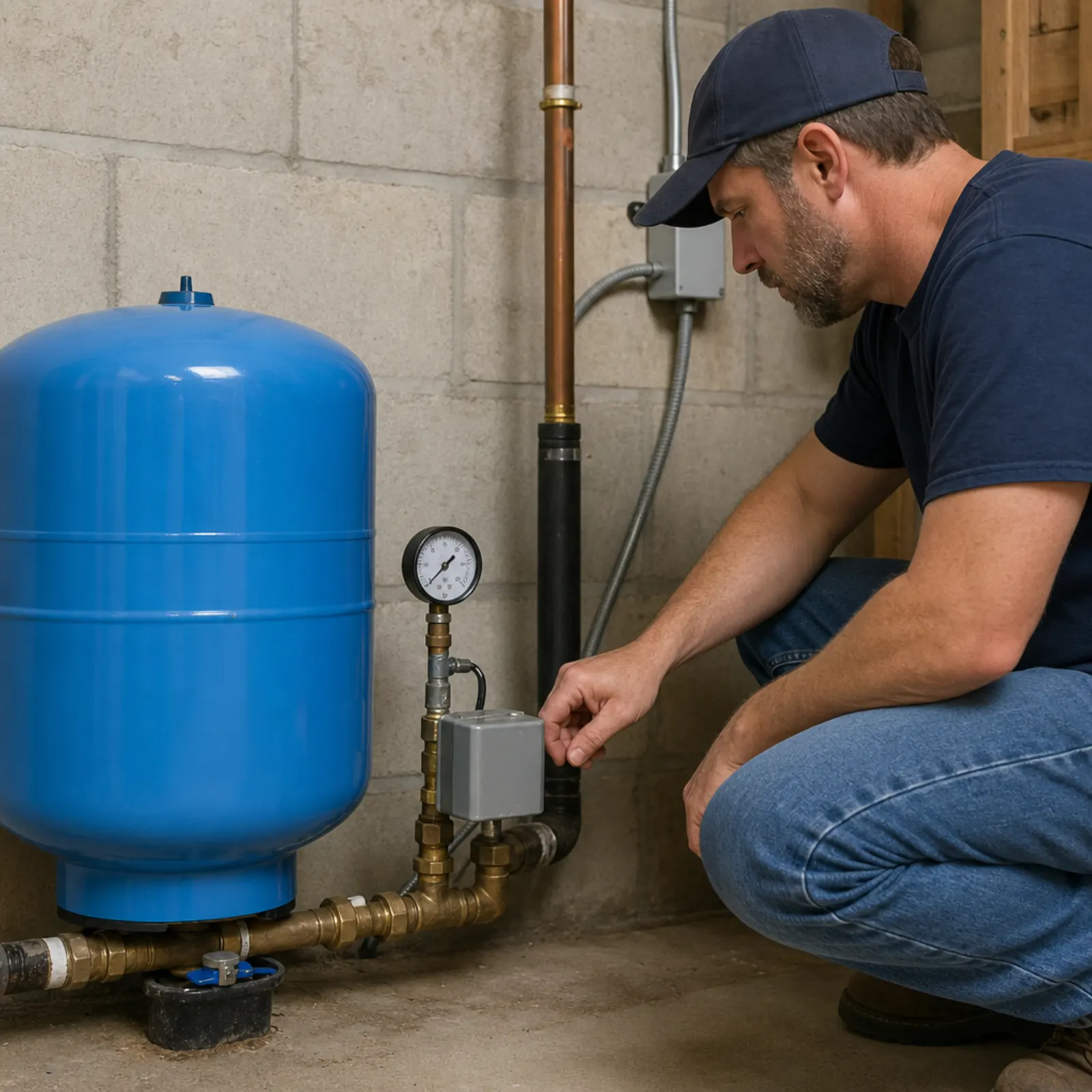
Well pump replacement in Hendersonville runs $1,200 to $2,500 for wells under 200 feet, $2,000 to $3,500 for 200 to 400 feet, and $3,500 to $6,000 for deeper wells and constant-pressure systems. Every one of those numbers includes pulling the old pump, the new pump matched to your depth and yield, new wire and splice, a torque arrestor, reinstallation, chlorination, and a pressure test. A jet pump swap is $700 to $1,500. Find your depth on the pump plate the state requires on the casing, or on the county well record, and the quote gets tight fast.
When a pump really needs replacing
A pump is condemned only after the cheaper parts are ruled out on a diagnostic visit. The signs that it is actually the pump:
- Good voltage, no amps. The motor has an open winding or the wire is broken. If the wire tests good, the motor is dead.
- Locked rotor amps. The pump draws several times its rated current and trips the breaker. The motor is seized or shorted.
- Runs, cannot reach cut-off. The gauge climbs to 40 or so and hangs there with everything closed. Worn impellers, common after 12 to 15 years and much sooner in a sandy well or a short-cycling system.
- Sand or grit in the strainers with falling pressure. The pump end is wearing and the well is producing fines.
- A pump that has been run dry. A low-yield well pumped past its recovery, or a failed switch that let it run all night. Heat kills the motor and the thrust bearing.
If you are calling because of short cycling, low pressure, or a sudden no-water event, do not assume the pump. Most of those calls end in a switch, a capacitor, or a pressure tank.
Sizing a pump for a Henderson County well
This is the part of the job that determines whether the new pump lasts fifteen years or three. Mountain wells are drilled into fractured granite and gneiss, and the U.S. Geological Survey notes that these crystalline-rock aquifers give an average reported yield of about 15 to 20 gallons per minute, that fractures get scarcer with depth, and that ridges and steep slopes carry thin regolith and low yields while broad valleys and draws carry the good wells. Practically:
- Depth to water, not depth of well. The pump has to lift from the pumping level, the level the water falls to while the pump runs, to the tank, plus overcome the switch’s cut-off pressure and friction in the drop pipe. A 400-foot well with water at 60 feet is an easy pump. A 300-foot well with water at 250 is a hard one.
- Yield sets the flow rating. A pump rated for 10 gallons per minute in a well that recovers at 3 will pump the well down to the intake in minutes, suck air, and cook itself. Low-yield wells call for a lower-flow, higher-stage pump, a lower setting, sometimes a pump protection device that shuts it off on dry run, and sometimes a storage tank. The USGS notes that wells hitting only a few small shallow fractures can deliver fine at first and then drop sharply once those fractures drain, which is exactly the well that needs the protection.
- The house sets the demand. A three-bath house with an irrigation zone on a Flat Rock estate lot needs more than a cabin in Zirconia. Size to peak demand, then check it against yield.
- 2-wire or 3-wire. Two-wire pumps carry the start components inside the motor; three-wire pumps use a control box on the wall. Both are fine. Matching what the house has makes sense unless the box location is a problem.
- Constant pressure. A variable-speed drive holds a steady 60 psi regardless of demand and eliminates the pressure swing between cut-in and cut-out. It is the right choice for larger homes and anyone tired of the shower fading when the washer fills, and it prices in the $3,500 to $6,000 range.
How the replacement goes
- Pull. The well cap comes off, the pitless adapter is released with a tool from the top, and the drop pipe, wire, and pump come up. On wells past about 200 feet that is a truck-mounted hoist; on shallow wells it may be done by hand. Every foot of pipe and wire is inspected as it comes up, because a chafed wire or a split at a coupling is why some “pump failures” happen.
- Measure. Total depth, static water level, and, once the new pump is in, pumping level. If the old pump was set wrong for the current water level, the new one is set right.
- Set. The new pump goes on new drop pipe where the old is questionable, with fresh wire, a heat-shrink splice, and a torque arrestor above the pump to stop it swinging into the casing on start-up. Check valve at the pump.
- Reconnect and record. Pitless reseated, cap on, control box or switch wired. State rules require a plate on the casing with the install date, intake depth, and horsepower, and we install it; the next well man will thank you.
- Disinfect and flush. Chlorine down the well, circulated, held, then flushed at an outside hydrant until it clears. North Carolina requires disinfection after pump installation or repair. The well is off limits for drinking until it runs clear and tests clean.
- Test. Pressure at the tank and at the farthest tap, cycle time, and amp draw under load, all recorded.
Jet pumps and old wells
Older homes in Etowah, Mountain Home, and the Green River side often still have a jet pump on a shallow drilled, bored, or dug well. A shallow-well jet pulls by suction and cannot practically lift more than about 25 feet; a deep-well jet uses two pipes and an ejector down the well. Both are noisy, lose prime, and are inefficient compared with a submersible, and a jet swap runs $700 to $1,500. If the well is a drilled well of real depth, converting to a submersible is usually worth it. If it is a 30-foot bored well with a concrete tile casing, the honest question is whether the well itself meets today’s standards; the state’s guidance says old wells that do not meet current construction rules need to be repaired or properly abandoned, and a new well may be the right call.
Who may replace a pump in North Carolina
Pump installation is a regulated activity. The state’s Well Contractors Certification Commission requires a certified contractor, Level D or higher, present whenever a pump is installed or repaired, and licensed plumbers hold a limited exemption to open the well seal and disinfect when replacing a pump if they have completed the required training. State session laws also exempt a certified well contractor from the electrical license and permit for its own pump wiring. Check the certification level of anyone who works on your well, us included. Ask for the credential; a good crew is glad to show it.
Areas covered for pump replacement
Across Hendersonville and Henderson County, including Flat Rock, Fletcher, Mills River, Etowah, Dana, Edneyville, Zirconia, and Mountain Home, plus Brevard and Columbus. Send the symptom and the depth from the pump plate and we can give a number from the pricing page and a date. If the honest answer is that your well needs a smaller pump and a storage tank instead of a bigger pump, that is the answer you should hear.
Frequently Asked Questions
How much does it cost to replace a well pump in Hendersonville?
A submersible pump replacement runs $1,200 to $2,500 for wells under 200 feet, $2,000 to $3,500 for 200 to 400 feet, and $3,500 to $6,000 for deeper wells or constant-pressure systems. That includes pulling the old pump, the new pump, new wire and splice, a torque arrestor, reinstalling, chlorinating, and testing. A jet pump swap is $700 to $1,500. Depth is the biggest driver, so find it on the pump plate or the county record.
How do you pick the right pump?
By depth, yield, and the house. The pump has to lift water from the pumping level (not the top of the well) to the tank and still make cut-off pressure, and it has to be sized so it does not pump a low-yield well dry. A 1/2 horsepower 10-gallon-per-minute pump is right for many 200-foot wells; a 500-foot well making 3 gallons a minute needs a smaller-flow, higher-stage pump. Oversizing is the most common mistake in replacements.
How long does a pump replacement take?
Most are done in half a day. Pulling 200 to 400 feet of drop pipe with a truck hoist, inspecting it, setting the new pump with fresh wire and a torque arrestor, and chlorinating takes a few hours; then the well is flushed until the chlorine clears. Deep wells, stuck pumps, or a broken drop pipe that has to be fished can add time, and you should hear that before work starts.
Should I replace my jet pump with a submersible?
Usually, if the well is drilled and deep enough. Jet pumps sit above ground, lose efficiency fast past 25 feet of lift, are noisy, and lose prime. A submersible pushes from the bottom, is quieter and more efficient, and does not care about prime. On an old shallow bored or dug well, though, there may not be room or depth for a submersible, and a jet pump replacement at $700 to $1,500 is the honest answer.
Do I need a permit to replace a pump?
Henderson County requires a permit before a well is drilled, repaired, or abandoned, and the state defines a repair as deepening, re-casing, re-grouting, screening, cleaning, or otherwise altering the well. Replacing the pump is pump installation, which North Carolina regulates through the well contractor certification rather than a permit: a Level D or higher certified contractor must be present, and the well must be disinfected afterward. If your job also involves the well itself, the permit comes from Henderson County Environmental Health.
More wellpump services
Areas we serve
- Hendersonville, NC
- Well Pump Repair in Brevard, North Carolina
- Well Pump Repair in Columbus, North Carolina
- Well Pump Repair in Dana, North Carolina
- Well Pump Repair in Edneyville, North Carolina
- Well Pump Repair in Etowah, North Carolina
- Well Pump Repair in Flat Rock, North Carolina
- Well Pump Repair in Fletcher, North Carolina
- Well Pump Repair in Laurel Park, North Carolina
- Well Pump Repair in Mills River, North Carolina
- Well Pump Repair in Saluda, North Carolina
- Well Pump Repair in Zirconia, North Carolina