 Hendersonville Well Pump Repair
 Pressure Tanks and Switches in Hendersonville
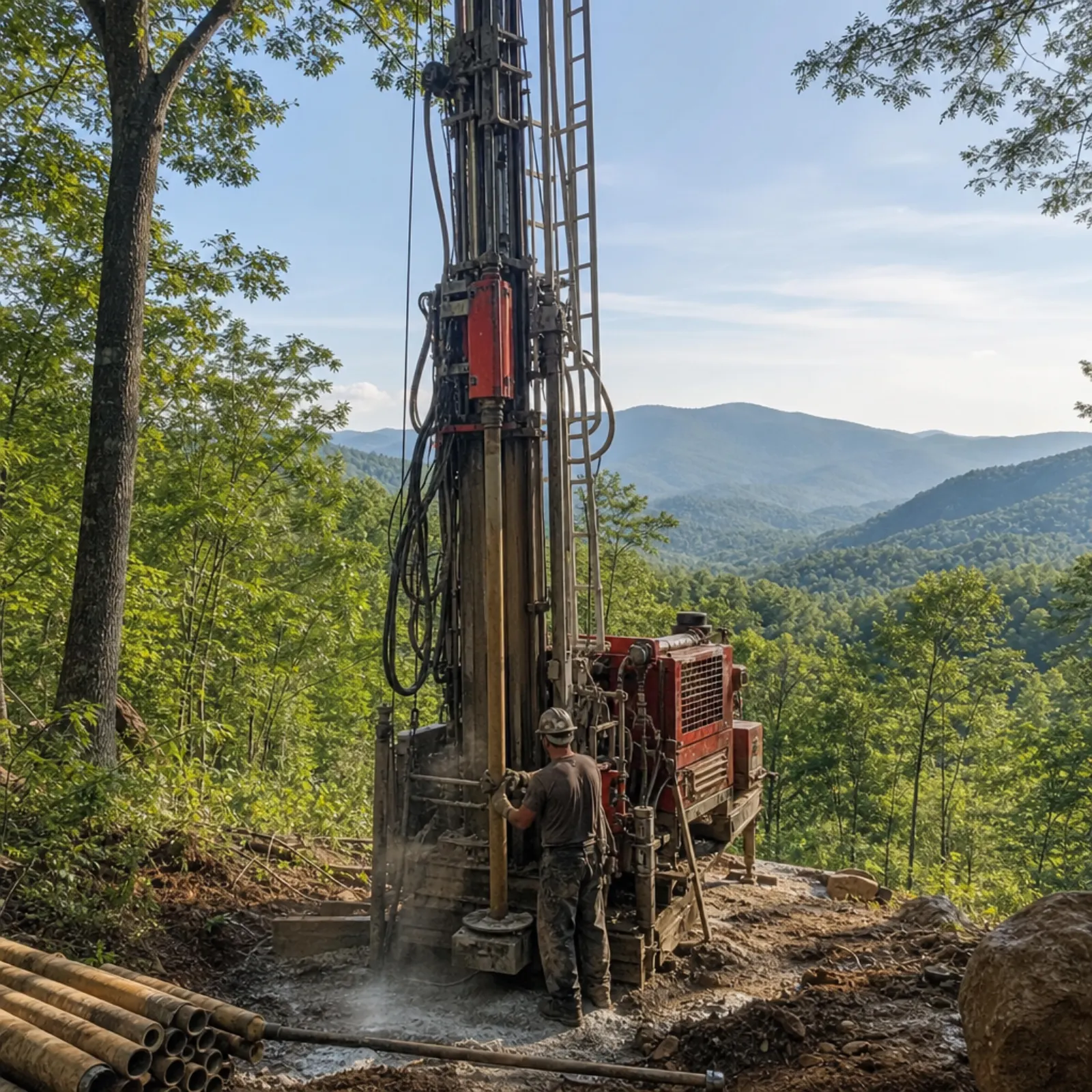
Pressure tank and pressure switch work in Hendersonville costs $600 to $1,500 for a bladder tank installed and $150 to $350 for a pressure switch, with a control box $200 to $450 and a check valve $200 to $400. These are the parts that fail most often on a private well and cost the least to fix, and they are also the parts that quietly destroy a $1,200 to $3,500 pump when they are ignored. A pump that starts and stops every few seconds has a tank or valve problem, and fixing it this week is the cheapest pump insurance in Henderson County.
What the tank and switch do
A submersible pump can push water, but it cannot store it. The pressure tank does that: a steel tank with a rubber bladder or diaphragm inside, water on one side, compressed air on the other. The pump fills the bladder, the air compresses, and when you open a tap the air pushes water out so the pump does not have to start for every glass of water. The pressure switch on the tank tee watches the pressure and turns the pump on at cut-in (30 or 40 psi on most homes) and off at cut-out (50 or 60). The check valve keeps the water in the tank and the pipe from draining back down the well when the pump stops. On a three-wire pump, the control box on the wall holds the start capacitor and relay that get the motor spinning.
Every one of those parts is sized to the others. A tank too small for the pump forces short cycles. A switch set wrong for the tank precharge does the same. A failed check valve makes a healthy tank look waterlogged. That is why they should be replaced as a system, so ask for the whole tee to be checked on any visit.
Short cycling: the pump killer
Pump on, off, on, off, every few seconds while the shower runs. It is usually one of two things:
A waterlogged tank. The bladder has ruptured or lost its air charge, the tank is full of water with no cushion, and the pressure swings from cut-out to cut-in the instant a tap opens. Tap the tank from top to bottom: a good tank rings hollow up top and thuds at the bottom, a waterlogged one thuds all the way up. Press the air valve on top: water means a ruptured bladder.
A failed check valve. The valve at the pump or at the tank is stuck open, the column drains back into the well between cycles, and the pressure falls off even with no tap open. The gauge dropping to cut-in with everything closed is the tell.
Why it matters: starting is the hardest thing an electric motor does. The inrush current heats the windings, the thrust bearing takes the load, and a submersible is designed for a minimum run time per cycle to carry that heat away. A tank that should give the pump a minute of rest between starts instead gives it three seconds, and a pump rated for a fifteen-year life burns up in two or three. A $600 tank or a $200 valve versus a $3,000 pump replacement is not a close call.
What gets installed
- Bladder tanks, 20 to 44 gallons and up. Sized to the pump so it runs at least its minimum cycle. A 1/2 horsepower pump on a typical house is fine on a 32-gallon-class tank; a 1 horsepower pump or a large house wants 44 or more, or two tanks. Bigger is rarely wrong.
- Tank tee, gauge, relief valve, drain. Replaced with the tank; the old ones are rusted from the same acidic water that killed the bladder.
- Pressure switch, 30/50 or 40/60. Matched to the tank precharge and the house. Low-pressure cut-off switches for homes on low-yield wells, so a well pumped down shuts the pump off instead of letting it run dry.
- Check valve. Replaced at the tank; if the valve at the pump has failed, that is a pull and is priced as pump work.
- Control box. Replaced with the correct box for the pump’s horsepower; a mismatched box is a common cause of nuisance trips.
- Sediment filter ahead of the switch tube. Cheap, and it stops the iron sludge that plugs switches in this county.
Why these parts fail faster here
Groundwater in the Blue Ridge granite and gneiss is acidic, commonly pH 5.5 to 6.5 in western North Carolina wells, and it carries dissolved iron and manganese from the rock. Acid water corrodes the steel tank tee and gauge, iron precipitates into sludge that plugs the switch’s sensing tube, and both shorten the life of every fitting on the tee. A tank tee that looks fine in a Fletcher house on city water is a rusted mess after eight years on a Dana well. The fixes are a neutralizer upstream of the tee where the pH warrants it, and brass or stainless fittings where they touch raw water.
Cold is the other one. Hendersonville’s January mean low is 26.5 degrees, and a pressure switch mounted on a tank in an unheated well house or a drafty crawlspace freezes at the tube first. A frozen switch reads no pressure and either starves the house or runs the pump against a frozen line. Heat tape and a working heat lamp before December are cheaper than a January service call at the after-hours rate.
Setting the precharge
The air charge in the tank must be 2 psi below the switch cut-in, checked with the pump off and the tank drained of water. Most tanks ship at 38 or 40 psi for a 40/60 system; a 30/50 system needs it dropped to 28. A tank with the wrong precharge short-cycles even with a perfect bladder, and it is the single most common thing corrected on a service visit to a tank somebody else installed. Ask for it to be checked on any call, and you can check it yourself with a tire gauge.
Constant-pressure alternative
If you are replacing the tank because the pressure swing annoys you, the shower fading every time the washer fills, a variable-speed constant-pressure drive holds a steady 60 psi and needs only a small tank. It is priced with the pump at $3,500 to $6,000 because it usually goes in with a new pump, and it is on the pump replacement page. For most houses a properly sized conventional tank and a 40/60 switch is the better value.
How a tank and switch visit goes
- Gauge reading, cycle timing, tank tapped and air valve checked.
- Check valve tested by watching the gauge with the pump off and taps closed.
- Switch contacts and tube inspected, control box capacitor tested.
- Tank drained, precharge checked, bladder condition confirmed.
- Replacement of what failed with the tee, gauge, and switch renewed together; precharge set; system pressurized and cycle time verified.
- Numbers recorded for you: cut-in, cut-out, precharge, cycle time.
Areas covered
Hendersonville and the county: Flat Rock, Fletcher, Mills River, Etowah, Dana, Edneyville, Zirconia, Tuxedo, Mountain Home, plus Brevard and Columbus. Tank and switch work is usually a one-visit job. Every price is on the pricing page, and if your pump is cycling right now, send the symptom today rather than after it fails.
Frequently Asked Questions
How much does a new pressure tank cost installed?
$600 to $1,500 for a 20 to 44 gallon bladder tank, installed with a new tank tee, gauge, relief valve, and usually a new pressure switch since they are the same age. Small tanks on a cabin sit at the bottom; larger tanks sized to a high-horsepower or constant-pressure system sit at the top. Crawlspace and well house access moves it a little.
How do I know my pressure tank is bad?
The pump starts and stops every few seconds while a tap runs, the gauge swings wildly, or the tank feels solid and heavy all the way to the top when you tap it. A healthy bladder tank is hollow at the top and heavy only at the bottom. Also check the air valve on top: if water sprays out when you press it, the bladder has ruptured.
What pressure should my tank be set at?
The air precharge should be 2 psi below the pressure switch cut-in, measured with the pump off and the tank drained. A 30/50 switch wants 28 psi in the tank; a 40/60 switch wants 38. A tank that has lost its precharge short-cycles even with a good bladder, and topping it up is a five-minute check on every visit.
Why does my pressure switch keep failing?
Iron and sediment. Mountain well water carries iron and is acidic, and the tiny tube that feeds the switch plugs with rust and scale, or the contacts pit from the arc every time the pump starts. Switches also fail from a tank that short-cycles them thousands of extra times a year. Fix the tank, add a sediment filter ahead of the switch, and a switch lasts years instead of seasons.
More wellpump services
Areas we serve
- Hendersonville, NC
- Well Pump Repair in Brevard, North Carolina
- Well Pump Repair in Columbus, North Carolina
- Well Pump Repair in Dana, North Carolina
- Well Pump Repair in Edneyville, North Carolina
- Well Pump Repair in Etowah, North Carolina
- Well Pump Repair in Flat Rock, North Carolina
- Well Pump Repair in Fletcher, North Carolina
- Well Pump Repair in Laurel Park, North Carolina
- Well Pump Repair in Mills River, North Carolina
- Well Pump Repair in Saluda, North Carolina
- Well Pump Repair in Zirconia, North Carolina